
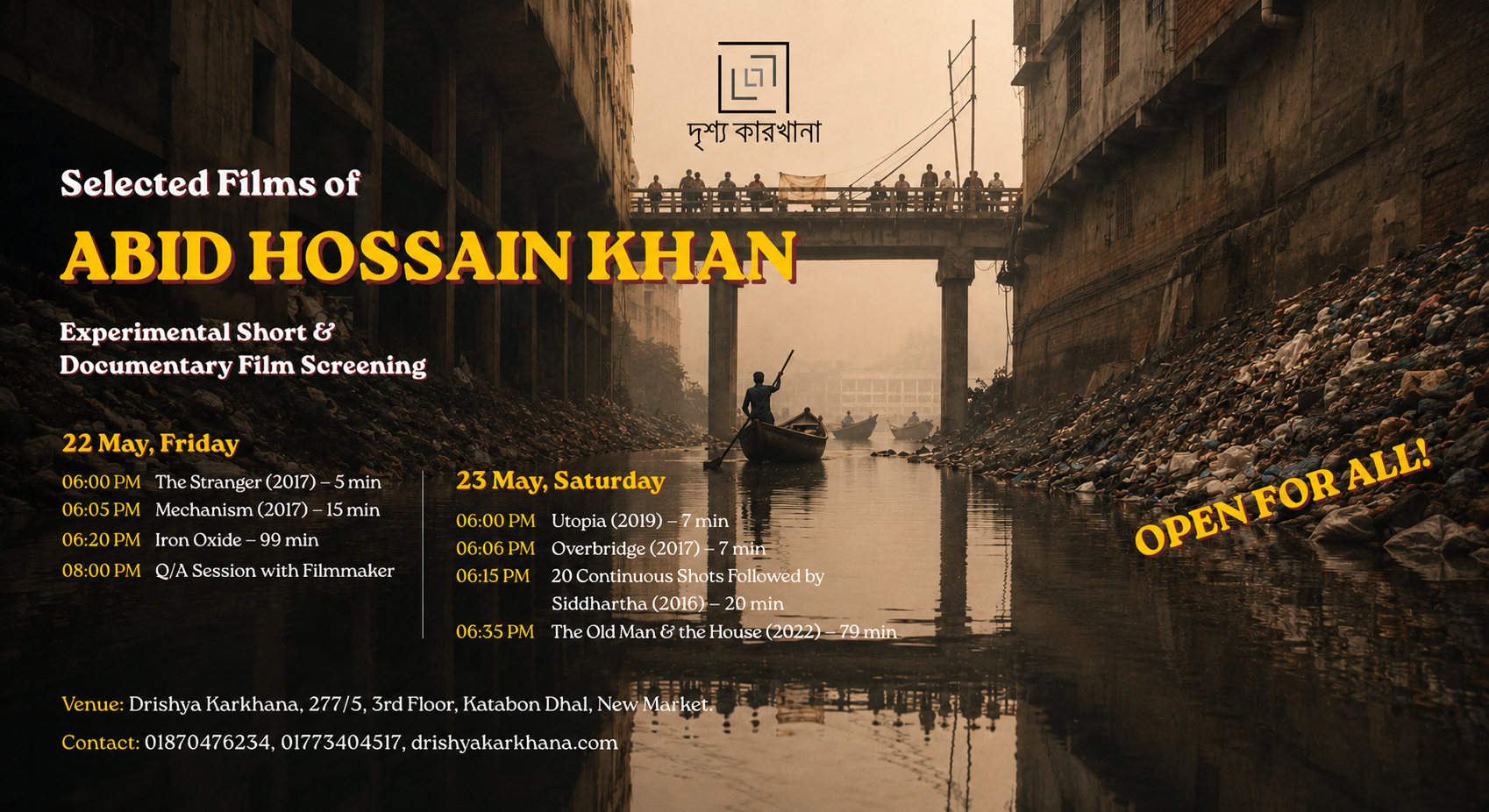
SELECTED FILMS OF ABID HOSSAIN KHAN
(Experimental Short & Documentary Film Screening)
A two-day screening event featuring selected experimental shorts and documentary films by Bangladeshi independent filmmaker Abid Hossain Khan.
📅 22–23 May
🕕 Starts at 6:00 PM
🎟 Open for all
📍 Venue: Drishya Karkhana, 277/5, 3rd Floor, Katabon Dhal, New Market
About Filmmaker (Abid Hossain Khan)
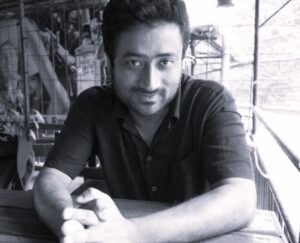 Abid Hossain Khan is a Bangladeshi independent filmmaker born in 1984. He has experience in film production, film editing, acting, and screenplay writing. He has produced several documentary and experimental films, some of which have been screened and awarded at national and international film festivals. His short film 20 Continuous Shots Followed by Siddhartha was selected at Paris-Berlin Rencontres. His first feature documentary film Belonging, centered on a Rohingya refugee girl living in a camp in Bangladesh, received awards at the 17th Hong Kong – Asia Film Financing Forum and also received a grant from the Government of Bangladesh. Since 2019, he has completed several feature documentary and experimental films.
Feature Documentary
The old man and the house (2022) – 79 min
This film is the portrait of Mozaffar, the filmmaker’s father, a devout Muslim man living in a small community in Bangladesh. The camera follows him through his daily routines. The prayers that punctuate his day are, like his religious ideas, part of a rich, complex, even unpredictable package of warm humanity.
The beautiful images rarely go beyond the confines of the old man’s humble house and garden. He has something to say about every tree and each small plant in his property. They are not there by chance; he chose them for a reason and thanks to his remarkable curiosity he has learned their origins and uses. As the movie unfolds and we get to know him better, it becomes clear that Mozaffar applies the same hunger of knowledge to every aspect of his life.
As he goes about his activities, we learn from his monologue that the is a retired teacher who has lived with eyes wide open through the transformations of his country seeing change through a humanist lens. Books are important to him. Even though he is losing his vision, he is devoted to reading newspapers, bringing them close to his face to read the headlines. Learn about the changing world is important to him. Nothing escapes his skeptical, independent, sometimes arbitrary mind. His tips on cooking and nutrition are as interesting as his comments on old Muslim rulers.
The loss of vision forces him to go to a hospital in a sequence that brings him to the outside world of modernity and technology. He undergoes cataract surgery. His vision of the world always clear in his mind, had been obscured by age. Cataracts are not the only threat to his relationship with the world. Ominous noises announce another menace to his tranquility.
A tree damaged by cement, the noises of the city, suggest themselves subtly through noises, Perhaps his house was seldom touched by the passing of time, many of the images could come from a 1950s documentary (the black and white photography give a sense of timelessness), but his little universe is being surrounded by the proximity of urban development, the construction of a high rise is forever altering the tranquility of his garden, the watchtower from where he observes the world.
There is nothing in the film that could be interpreted as a political screed, however, the quiet, unhurried narration leaves no room for stereotypes of what is to be expected of a Muslim man from a small community in Bangladesh. It also warns the viewers about the rich lives that the hectic demands of modernity have no use for. In a quiet way it demolishes prejudices and denounces thoughtless embraces of change for changes sake.
This film is first and foremost the loving portrait of a father in all his humanity, and when we get to know Mr. Hossain Khan we learn about a Bangladesh that is hidden and quickly disappearing.
Iron Oxide (2022) – 99min
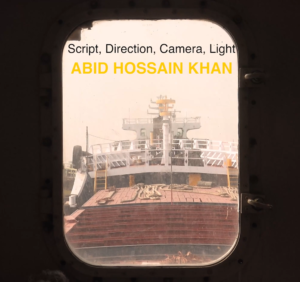 The river Buriganga, a major lifeline of Dhaka, Bangladesh, extremely polluted. The dockyards on its banks provide job opportunities for countless cheap, unskilled manual laborers, living with their families near these sites.
Santu and Asma are such a family. He works at the docks; she tries to keep the family running with the little means she gets from her husband. Not mincing their words, they both comment openly – at times aggressively – on their struggle to make ends meet, their crisis in their relationship, their believes, their social life.
This ethnographic observation with its simple narrative gives a glimpse of the living conditions of the working class at the lower end of the social scale. Climate change, pollution, extreme working conditions, financial hardship, personal relationship problems, illness. – And yet, there is humour and laughter.
Experimental Short
The Stranger (2017) – 5min
In purgatory, a lonely soul meets Ludwig van Beethoven telling him that the second movement of his seventh symphony makes him cry. He then meets Charles Baudelaire. After returning to earth, our hero starts reciting Baudelaire’s poem ‘The Stranger’. He is in twenty-first-century Dhaka, Bangladesh. Music and poetry acquire a new meaning– family is about shabby urban dwellings, friendship about the embrace of social media apps, the fatherland about the alleys of a shantytown. Art crosses boundaries.
Overbridge (2017) – 7min
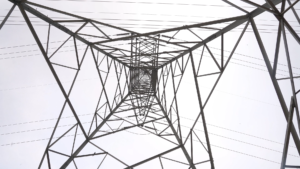
Overbridge, far too wide to cross.
A white man retired from a rich county wearing an identity he can’t discard, trying to be invisible but has the wrong mind trap and colour skin. He can only witness, unable to engage in his new country.
Mechanism (2017) – 15min
Sewing machines, workers on sewing machines, the environment of workers operating the sewing machines. Garments, the splendors and miseries of Bangladesh. Working class.
The sheer endless look outside a window onto a narrow street, people coming and going, is metaphoric for the plight of the workers at the lower end of the value chain: there is no escape, they are trapped.
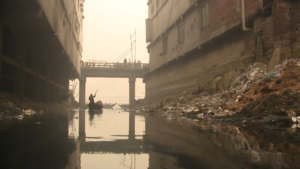 Dismal environment superseded by billboards advertising for the workers’ efforts – unaffordable for them – made for people with money. Consumerism, capitalism.
The change from black and white pictures to color pictures might raise hope for a betterment, but there is nothing but waste and pollution. Like the almost romantic scenes in the countryside – overexposed like in a dream – end in the ‘real life’, pollution and destruction.
The bright lights – hyperreality of a brighter life.
And finally, the boat ride slowly following a rower through a narrow canal lined with factory buildings. He guides us towards the light. A brighter future? We don’t see it.
20 continuous shots followed by Siddhartha (2016) – 20 min
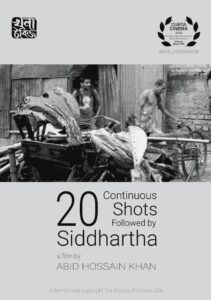 Twenty continuous shots linger over the slums of Dhaka, contrasting a young man’s search for moments of stillness and clarity with the megacity’s constant onslaught of sound and movement. The young man seeks peace on a series of bridges crossing an open sewer while the noises of modern urban life – from radio advertising to religious sermons – babble on without pause.
Utopia (2019) – 7 min
A mysterious wonderer and the streets of Dhaka provide compelling context for a meditation on Martin Niemoeller’s poem “First they came”. The striking dialogue between the images and the poem encourages a fresh consideration of the words and their implications for today and the future.